ΣΧΟΛΙΟ ΙΣΤΟΛΟΓΙΟΥ : Φαίνεται ότι αυτά που λέμε, όχι μόνο τα διαβάζουν πέραν του Ατλαντικού, αυτό άλλωστε το γνωρίζουμε πολύ καλά, αλλά αρχίζουν και να εφαρμόζουν αυτά που τους λέμε.!Λέγαμε ότι ...Ουδέποτε θα νικήσει Αχίλλεια χερσαία δύναμη (Κίνα) αν οι αντίπαλες ναυτικές Οδύσσειες δυνάμεις, (Η.Π.Α) έχουν για σύμμαχο τους Αχίλλειες δυνάμεις που η συνορεύουν, η είναι αρκετά κοντά με την αντιμαχόμενη Αχίλλεια δύναμη. Τα λέγαμε και
εδώ.
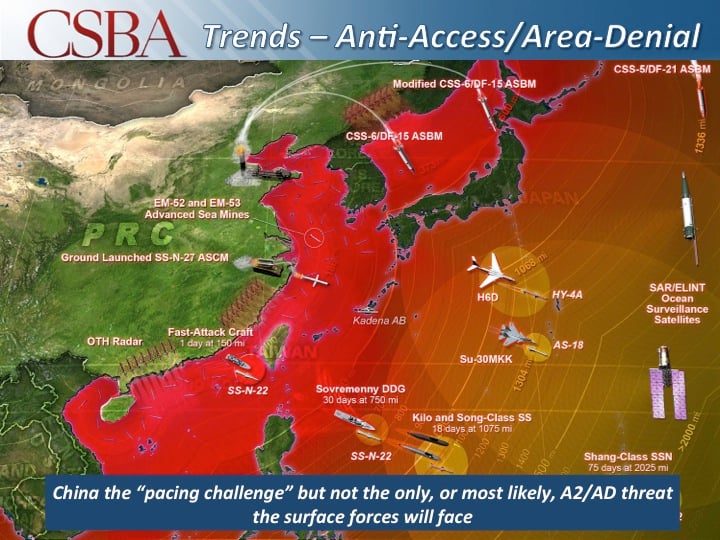
The Center for Strategic & Budgetary
Assessments has some new ideas for how even relatively poor allies can
help keep the peace in the Pacific.
As it seeks to contain a
rising China,
America’s great advantage is its
larger network of Asian
friends and
allies. Not all of these nations have the combat power to deter Chinese
aggression, let alone fight alongside the US in the nightmare scenario
of war. But even our smaller allies can play a vital role as what
President Kennedy
called “watchmen on the walls of world freedom” by using radar, drones and long-range networks to monitor Chinese moves.
The new
Indo-Pacific Strategy
released last week marked yet another salvo in the U.S. effort to
counter Chinese expansionism and encourage America’s allies and partners
to do more in their own defense. Momentum is building behind the
argument, advanced by
CSBA, the
Army,
CSBA, and
the Marines, that
long-range anti-ship, anti-aircraft, and missile defense weapons
should be based in First Island Chain countries like
Japan and the
Philippines to form the dug-in backbone of the allied defense, with air
and sea forces forming a mobile reserve.. But these missiles would be
beyond the capabilities and the budgets of most Southeast Asian
militaries. Instead, the most important contribution these countries can
make to regional security is monitoring Chinese activity and protecting
communications along what would be the front line of future Chinese
aggression.
A reliable surveillance and communications network along the First
Island Chain from Japan to Malaysia could warn U.S. and allied leaders
of attacks and help them respond in a coordinated fashion. More
importantly, having this system in place during peacetime could enable
America’s friends in the region to better understand and, perhaps,
counter Chinese “
gray-zone” tactics such as unlawful island-building and harassment of shipping by Chinese maritime militia ships.