ΣΧΟΛΙΟ ΙΣΤΟΛΟΓΙΟΥ : El Niño σημαίνει "Μικρός Θεός" και κανείς δεν μπορεί να πάει κόντρα σε έναν "θεό". Όποιος και να είναι αυτός πάνω στον πλανήτη, υπερδύναμη η ακόμα και η μεγαλύτερη στρατιωτική δύναμη.Τα σημεία που εμφανίζονται, όλο και ποιο έντονα, είναι σημεία... εγγυμοσύνης! Ο
Έρωτας... δηλαδή τα πρώτα σημάδια αλλαγής της συχνότητας της γης,
εμφανίστηκαν αρχικά με το φαινόμενο Ελ Νίνιο πριν από 25+ έτη... αυτό
είναι ένα φαινόμενο που το παθαίνει η γη κάθε... περιοδικό κύκλο, καθ'
ορισμένων ετών. Βάζει τα καλά της... 12κάποντο, κόκκινο κραγιόν,
χωρίς μόλυβδο!! Βγαίνει στο διαστημικό σεργιάνι... και ψάχνει να βρει γαμπρό. Ο συνήθεις γαμπρός στο ηλιακό μας σύστημα είναι ο ήλιος
μας... καταλαβαίνει πότε έχει οίστρο το κορίτσι.. και ανταποκρίνεται...
μιλάμε για σχέση ερωτική και αλλυλένδετη! Σε λίγο θα έχουμε τα γεννητούρια... λόγο έντονης συστολής διαστολής... να βάλετε τα καλά σας ειδικά εκεί εσείς που κατοικείται στην περιοχή που βλέπουμε στην φωτογραφία γύρω απο το El Niño.!! Όταν γράφω ότι μερικοί δεν θα βρουν πατρίδα να γυρίσουν μετά από τον μεγάλο πόλεμο...κυριολεκτώ.
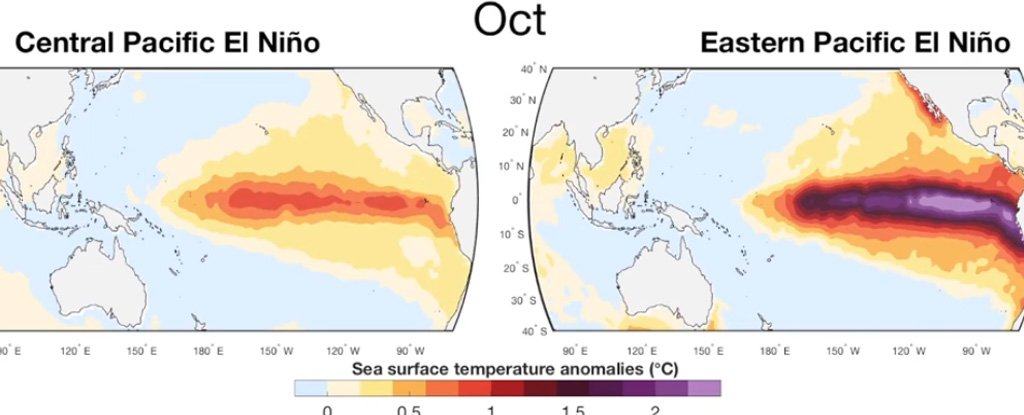 The pattern of El Niño has changed dramatically in recent years,
according to the first seasonal record distinguishing different types of
El Niño events over the last 400 years.
The pattern of El Niño has changed dramatically in recent years,
according to the first seasonal record distinguishing different types of
El Niño events over the last 400 years.
A new category of El Niño has become far more prevalent in the last few decades than at any time in the past four centuries. Over the same period, traditional El Niño events have become more intense.
This new finding will arguably alter our understanding of the El Niño phenomenon. Changes to El Niño will influence patterns of precipitation and temperature extremes in Australia, Southeast Asia and the Americas.
Some climate model studies suggest this recent change in El Niño "flavours" could be due to climate change, but until now, long-term observations were limited.
A new category of El Niño has become far more prevalent in the last few decades than at any time in the past four centuries. Over the same period, traditional El Niño events have become more intense.
This new finding will arguably alter our understanding of the El Niño phenomenon. Changes to El Niño will influence patterns of precipitation and temperature extremes in Australia, Southeast Asia and the Americas.
Some climate model studies suggest this recent change in El Niño "flavours" could be due to climate change, but until now, long-term observations were limited.

